Bad Control Arm Symptoms at a Glance
Bad control arm symptoms usually come from excess suspension play, often caused by worn bushings or a worn ball joint. Common signs include clunking noise, loose or unstable steering, vibration, and uneven tire wear. [S1][S2]
- Common symptom groups: noise, steering instability, vibration, and uneven tire wear.
- Main wear points to inspect: control arm bushings and the ball joint. [S2][S3]
- Warning signs that need prompt inspection: visible looseness, a pull that gets worse, or clunking noise combined with unstable steering.

Why these symptoms happen (the short mechanics)
That extra movement changes alignment moment-to-moment—so symptoms often feel worse under load. [S1][S2]
- Noise (clunk/knock/click): the arm shifts suddenly as the suspension loads/unloads.
- Wandering / pull: the wheel’s geometry changes as loads change.
- Vibration: looseness amplifies shake through the steering system.
- Uneven tire wear: toe/camber drift leads to edge wear or feathering.
Symptom matrix (static table + filterable enhancement)
Use this matrix to match what you feel to likely causes and the safest next check.
The table is fully readable without JavaScript; JS only adds filtering and search.
Steering
Vibration
Tire wear
Visual
Reset
| Symptom you notice | Most likely control-arm-related cause | Owner-safe next check | Severity |
|---|---|---|---|
| Clunk/knock over bumps (often front) | Worn/loose bushing or ball joint allowing sudden movement [S1][S2] | Note if it’s worse while turning or braking at low speed. | Medium |
| Clicking noise that appears with bumps or turning | Play can “click” as load changes; could also be CV axle or sway links | Check if clicking happens mostly in tight turns (CV is more likely); compare left vs right. | Medium |
| Loose steering / wandering (needs frequent correction) | Excess play changes wheel position under load (bushing deflection or joint play) [S1][S2] | On a straight road, note if the car won’t track; verify tire pressure first (baseline). | High |
| Vibration in steering wheel at certain speeds | Looseness can amplify vibration from wheels/road into steering [S1] | Does it change with braking or turning? If yes, suspension play becomes more likely. | Medium |
| Uneven tire wear (inner/outer edge, feathering) | Alignment drift due to worn bushings or a bent arm [S1][S2] | Compare left vs right wear patterns; look for edge wear and “feather” feel. | Medium |
| Pulling to one side that worsens under braking | Geometry shifts under brake load (bushing movement or damaged arm) | On a safe flat road, note if pull increases during braking (do not test aggressively). | High |
| Squeak/creak during slow turns or speed bumps | Dry/cracked bushing or joint boot deterioration (not always urgent) [S1] | Listen at low speed near a wall (sound reflection helps); look for torn boots. | Low |
| Torn bushing / separated rubber (visible) | Bushing failure allowing excess movement | With the car parked, visually inspect bushings for cracks/tears (no jacking required). | High |
| Ball joint boot torn + grease leaking | Boot failure increases wear risk; joint may develop play [S5] | Look for grease near the knuckle; schedule inspection soon. | High |
| Alignment won’t “hold” (wear returns quickly) | Underlying play prevents stable geometry even after alignment | If you recently aligned and wear returned, ask for a suspension play check. | High |
| Vibration + clunk together (especially on bumps) | More pronounced looseness in bushing/joint | Combined symptoms raise urgency—schedule inspection promptly. | High |

When to stop driving (safety triage)
Use a professional inspection for confirmation. [S1][S5]
| Situation | What it can indicate | Recommended action |
|---|---|---|
| Visible looseness/play, torn ball joint boot + grease, or symptoms are rapidly worsening | Higher likelihood of unsafe suspension play | Stop driving if possible and get inspected/towed if steering feels unstable. |
| Clunk + loose steering together (especially on bumps or braking) | Combined symptoms often point to meaningful play | Schedule inspection ASAP. Avoid high speeds and long trips until checked. |
| Vehicle pulls under braking or wanders on straight roads | Geometry may be shifting under load | Inspect soon. These are handling/safety-related symptoms. |
| Uneven tire wear only with no steering looseness | Could be alignment or early bushing wear | Schedule inspection and alignment check; avoid delaying if wear is accelerating. |
| Occasional squeak/creak only (no looseness, no tire wear) | Often a bushing/boot aging sign, not always urgent | Monitor + inspect at next service (earlier if it worsens). |
If you’re uncertain, use the “owner-safe checks” below and then book an inspection.
When you reach pricing/labor questions, we route that to a dedicated page: Control Arm Replacement Cost.
5 owner-safe checks (no special tools)
These checks help you describe the problem clearly and reduce guessing. They don’t replace a professional inspection.
- Trigger test (describe the pattern): does it happen on bumps, during braking, during turns, or at a specific speed?
- Visual look (parked, wheels straight): look for torn bushings, cracked rubber, or grease around ball joint boots.
- Tire wear check: run your hand across the tread; edge wear or feathering is a clue that alignment is drifting.
- Steering feel on a straight road: note wandering, delayed response, or the need for constant correction.
- Note any “combo” symptoms: clunk + looseness, or vibration + steering instability increases urgency.
Lower vs upper vs rear control arm symptoms (what changes?)
“Control arm symptoms” are similar across positions because the root cause is play, but where you feel it can differ.
Bad lower control arm symptoms
For a lower-specific deep dive (design, diagrams, and lower-only failure patterns), use: What Is a Lower Control Arm.
Bad upper control arm symptoms
Upper arms (common on double-wishbone and some rear setups) can show up as wandering steering, uneven tire wear, and “vague” steering feel.
If the upper ball joint is part of the arm, a torn boot/leak is a strong “inspect soon” sign. [S2][S5]
Bad rear control arm symptoms
Rear control arms/links can produce rear-end instability, uneven rear tire wear, or noise over bumps.
Rear suspensions are often multi-link, so a shop may name a specific link rather than “control arm.”
Bushing vs ball joint: which symptom pattern is more likely?
Many “bad control arm” complaints are actually one wear part. This table is a quick guide—not a diagnosis.
| What you notice most | More consistent with… | Why | What to ask a shop to check |
|---|---|---|---|
| Clunk on braking/acceleration changes (load shifts) | Bushing wear | Bushings can allow fore/aft movement under load | “Check bushing deflection and subframe/control arm bushings for tears.” |
| Torn boot + grease near the knuckle | Ball joint wear risk | Contamination accelerates joint wear | “Check ball joint for play and confirm if it’s integrated with the arm.” |
| Uneven edge tire wear + wandering | Either (bushings or joint) | Any looseness can shift toe/camber under load | “Do a suspension play check before alignment.” |
| Clicking noise mainly in tight turns | Often not a control arm | CV axle/outer joint is a common clicking source | “Rule out CV axle and sway links; then inspect control arm joints.” |
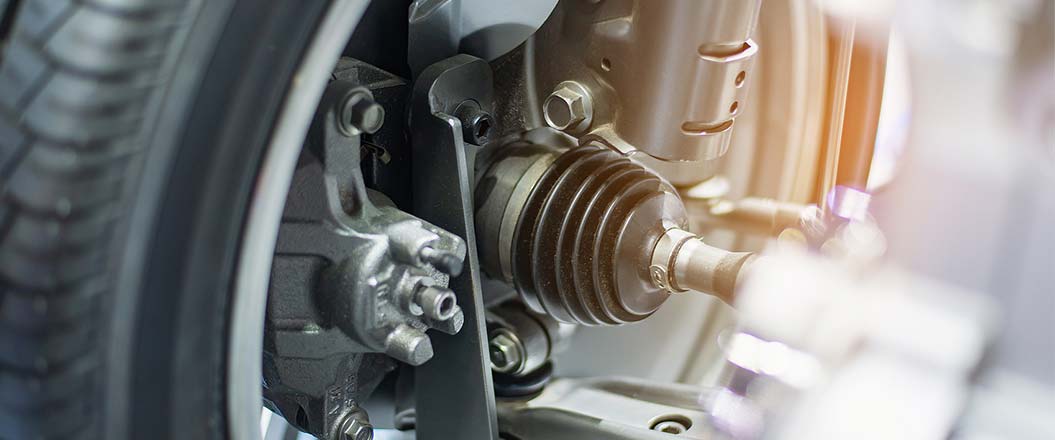
Not a control arm? Common lookalike problems
Several steering/suspension parts can mimic “bad control arm” symptoms. Use this table to avoid chasing the wrong repair.
| Symptom | Could also be… | Clue that points away from control arms |
|---|---|---|
| Clicking in tight turns | CV axle/outer joint | Clicking increases in tight circles; not necessarily bumps. |
| Single clunk over small bumps | Sway bar links | Noise is very “sharp” over small bumps; steering may still feel tight. |
| Vibration mostly at highway speeds | Wheel balance / tire issue | Vibration changes after rotating or balancing tires. |
| Wandering + uneven wear | Tie rods / steering components | Play shows up in steering linkage inspection. |
| Rough ride over bumps | Shocks/struts | Car bounces more; noise may be less “clunk” and more “thud.” |
What to do next (simple plan)
- Use the matrix to identify your symptom bucket and severity.
- Do the owner-safe checks to document patterns and visible damage.
- Book an inspection and ask for a suspension play check (not just alignment).
- If parts are replaced, confirm whether an alignment check is recommended for your vehicle.
- When you’re ready for pricing, use the dedicated page : Control Arm Replacement Cost.
Guide to Control Arms → then come back to this symptom matrix.
FAQ
What are the symptoms of a bad control arm?
Most owners notice one or more of these: clunking/knocking over bumps, loose or wandering steering, vibration in the steering wheel, and uneven tire wear. These happen because worn bushings or a ball joint allow extra movement (“play”). [S1][S2][S3]
Can a bad control arm cause clicking noise?
It can—play can click as load changes—but clicking in tight turns is also commonly linked to CV axles or sway links. Use the matrix to compare triggers (turning vs bumps) and get a suspension play check if you’re unsure.
What are the symptoms of bad control arm bushings?
Bushing issues often feel like clunks when braking/accelerating, wandering steering, and edge tire wear because the wheel shifts under load. Visible cracks or separated rubber are strong indicators. [S1][S2]
What are the symptoms of a bad lower control arm?
Lower control arm problems commonly show up as clunks over bumps, pull under braking, and rapid uneven tire wear. For lower-only detail (design + diagrams), use: https://jcmstech.com/what-is-a-lower-control-arm/.
Can you drive with a bad control arm?
Mild squeaks without looseness may be drivable short-term, but loose steering, pulling, visible damage, or clunk + instability should be treated as urgent. Use the stop-driving triage table and get inspected promptly.
What happens if a control arm or ball joint fails?
A ball joint is a critical pivot between the control arm and knuckle; if it wears severely, handling can become unsafe. That’s why torn boots/grease leaks plus worsening steering symptoms should be inspected quickly. [S5]
Where do I find replacement cost?
We keep pricing separate to avoid topic overlap: see https://jcmstech.com/control-arm-replacement-cost/.
| Query cluster (examples) | What we answer here | Where we route deeper |
|---|---|---|
| bad control arm symptoms / signs / control arm symptoms | Matrix + quick checks + stop-driving triage | Definition/types: Guide |
| bad lower control arm symptoms / bottom control arm symptoms | Lower vs upper vs rear overview (brief) | Deep dive: Lower control arm |
| clicking noise questions | Trigger-based explanation + lookalike table | Inspection guidance (shop) |
| bushing symptoms | Bushing vs ball joint decision table | Pricing routed: Cost page |
Sources
- [S1] AutoZone — Bad control arm symptoms (clunking, steering feel, vibration, tire wear).
- [S2] MOOG Parts — Signs of a failing control arm (wandering steering, tire wear, symptom explanations).
- [S3] NAPA Know How — Bad control arm symptoms and fixes (symptom list + general guidance).
- [S4] OEM service manuals (vehicle-specific suspension layouts and inspection procedures).
- [S5] MOOG Parts — Ball joint symptom guidance (boot condition and safety significance).