These technologies bring automation, digital control, and smarter material use into every stage of production. The result isn’t just faster output — it’s greater consistency, fewer defects, and parts that perform better in real-world conditions. In this article, we’ll look at how these innovations are improving the quality of auto parts and why they’ve become essential for staying competitive in a fast-moving industry.
Understanding Advanced Manufacturing Technologies
When people talk about “advanced manufacturing,” they often think of faster machines or new materials. But in reality, it’s much more than that. Advanced manufacturing is about transforming the entire production process — combining automation, robotics, digital monitoring, and data-driven decision-making to achieve a level of control that traditional methods simply can’t match.
In automotive parts production, these technologies include CNC machining, robotic assembly, 3D printing, digital twins, and IoT-based monitoring systems. Each plays a specific role. CNC machines bring micron-level precision to complex geometries. Robotics ensures repeatability and safety on the line. Digital twins allow engineers to simulate and refine processes before the first part is ever made. And IoT sensors collect real-time data from every station, creating a transparent view of performance and potential risks.
The shift isn’t only about speed — it’s about precision, stability, and traceability. In the past, a manufacturer might discover a dimensional error only after hundreds of parts were produced. Now, with intelligent systems watching every move, those errors can be detected and corrected immediately.
What used to be large-scale, repetitive production is now becoming flexible and adaptive. Whether it’s customizing a component for a new vehicle model or improving energy efficiency on the factory floor, advanced manufacturing allows you to adjust quickly without sacrificing quality. This flexibility is exactly what the modern automotive industry demands — and why the technologies behind it are now at the heart of every quality-driven production strategy.
How Advanced Manufacturing Improves the Quality of Auto Parts
The quality of an auto part is rarely defined by a single factor. It’s the result of precision, consistency, material integrity, and process stability all working together. Advanced manufacturing technologies strengthen each of these dimensions, allowing manufacturers to achieve levels of performance that were once out of reach.
Precision and Consistency
Every deviation in size or alignment can affect how a part fits and performs. Automated CNC machining and multi-axis systems minimize these variations by maintaining stable tool paths and repeatable motion control. Robots handle loading and unloading with accuracy measured in fractions of a millimeter, reducing the chance of human error.
The outcome is clear — tighter tolerances, cleaner finishes, and components that perform consistently across thousands of production cycles.
Surface Quality and Durability
Surface finish is more than appearance; it determines how a part resists friction, heat, and wear over time. With advanced cooling systems, tool management, and digital simulation, manufacturers can now predict and control how materials behave during machining.
This reduces micro-cracks and surface stress, extending the lifespan of key parts such as brake rotors, housing covers, or steering components. High-speed machining centers equipped with real-time thermal compensation ensure that even at extreme feed rates, the surface integrity remains intact.
Traceability and Defect Prevention
Quality doesn’t end at production — it continues through tracking and control. Intelligent sensors and data collection systems monitor each step of the process, from raw material input to final inspection. When parameters drift outside of tolerance, the system alerts operators instantly or even adjusts automatically.
This real-time visibility not only prevents defects from spreading through the line but also builds traceability into every component. In industries where safety is non-negotiable, such as braking and suspension systems, this level of control is essential.
Supporting Material and Structural Innovation
Modern vehicles demand parts that are lighter, stronger, and more complex in shape. That has pushed manufacturers to work with hybrid materials — combining metals, composites, and engineered plastics.
For automotive components that require strict dimensional control and high surface finish, we not only rely on metal machining but also make extensive use of plastic molding services to produce complex plastic parts, achieving overall optimization in material selection, processing, and quality.
In short, advanced manufacturing doesn’t just make production faster. It creates a closed loop of precision, verification, and improvement — where every step reinforces quality instead of leaving it to chance.
Key Technologies and Applications in Automotive Part Manufacturing
The impact of advanced manufacturing can be seen most clearly in how different technologies are applied to everyday production. Each innovation contributes to higher accuracy, better reliability, and shorter development cycles across the supply chain.
Digital Twin and Process Simulation
Before a single tool touches material, engineers can now model the entire production line in a digital environment. Through simulation, they evaluate mold design, tool paths, and thermal behavior long before physical machining begins.
This approach reduces trial-and-error during setup and helps predict how materials will react under different loads or temperatures. In mold design and precision machining, it prevents costly rework and shortens time to market — a significant advantage when working with fast-changing automotive models.
3D Printing and Additive Manufacturing
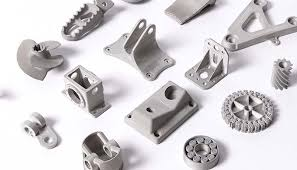
Additive manufacturing is no longer limited to prototypes. In the automotive sector, it is used for lightweight brackets, tooling inserts, and custom low-volume parts that demand complex internal geometries.
For example, engineers can print optimized cooling channels directly inside a mold, improving temperature control during injection molding. The technology’s ability to create shapes impossible with traditional machining opens new possibilities for design and performance optimization.
Robotic Automation and Intelligent Assembly
Automation has moved beyond simple handling tasks. Modern robotic systems assemble steering or suspension components with repeatable precision, ensuring consistent torque and alignment.
These robots also work alongside human operators, taking over high-risk or repetitive steps while maintaining safety and output speed. In mass production of mechanical assemblies, robotic automation has become the backbone of quality stability.
Smart Inspection and Real-Time Quality Monitoring
Inspection used to be the final step of production; now, it’s built into the process itself. Vision sensors, laser scanners, and in-line measurement systems monitor every part in real time, checking for deviations in dimensions, texture, or surface defects.
When data from these systems is combined with predictive analytics, manufacturers can anticipate tool wear or material inconsistencies before they affect the final product. For critical components — such as brake systems, axles, and suspension parts — this proactive approach ensures safety and reliability from the first batch onward.
Application Across Automotive Systems
- Braking Components: High-speed machining and automated inspection ensure smooth, precise interfaces that reduce vibration and wear.
- Drive Shafts and Transmission Parts: CNC and digital monitoring maintain concentricity and balance during continuous production.
- Suspension Systems: Robotic assembly improves bolt tightening accuracy and component alignment, enhancing driving comfort and stability.
Together, these technologies create a production ecosystem that learns, adapts, and continuously improves — one that turns precision into a predictable outcome rather than a lucky result.
Selecting the Right Supplier: What to Look for in Advanced Manufacturing
For buyers and engineers sourcing automotive components, the quality of the supplier often determines the quality of the final product. As advanced manufacturing becomes the new standard, evaluating a partner’s technological capabilities is as important as comparing prices or delivery times.
Technical Capabilities and Equipment
A qualified supplier should demonstrate clear investment in automation, process simulation, and intelligent monitoring systems. Modern CNC machining centers, robotic assembly lines, and digital inspection tools indicate a strong foundation for precision and consistency.
Process Control and Traceability
High-quality production requires stability, not just speed. Suppliers should maintain controlled environments for machining, molding, and finishing processes, supported by data-driven monitoring and traceability systems. This ensures every part can be tracked from raw material to delivery, minimizing the risk of undetected variation.
Material Management and Testing
Advanced manufacturing depends on precise control of materials. Look for suppliers that perform in-house testing on hardness, tensile strength, and surface integrity. Consistent documentation of these tests demonstrates a culture of quality rather than one-time compliance.
Certification and Quality Assurance
Certifications such as ISO 9001 or IATF 16949 show that a supplier follows structured quality management systems. However, certifications alone aren’t enough — what matters is how these standards are applied in daily production and how often processes are audited and improved.
Plastic Component Manufacturing Capability
For parts that combine metal and plastic, a supplier’s molding expertise is a key differentiator. Evaluate their plastic molding services — including mold precision, forming process stability, and post-processing capability. A strong integration between machining and molding leads to better fit, reduced assembly stress, and improved long-term reliability.
Measuring Supplier Performance
Establishing measurable indicators helps maintain accountability. Track metrics such as:
- Return or defect rates
- Dimensional deviation trends
- On-time delivery rate
- Response time to engineering changes
These KPIs provide objective insight into how consistently a supplier meets your expectations and whether their manufacturing systems genuinely support continuous quality improvement.
In the end, selecting a manufacturing partner is not only about who can produce parts, but who can maintain precision, transparency, and reliability across every production cycle.
Looking Ahead: Intelligent, Sustainable, and Quality-Driven Manufacturing
The next phase of automotive production is being shaped by intelligence and sustainability. Smart factories, powered by IoT connectivity, data analytics, and AI-driven process control, are redefining how quality is maintained. Machines now communicate with each other, collect performance data, and automatically adjust parameters to ensure consistency. This closed-loop system minimizes downtime and continuously refines accuracy without manual intervention.
As environmental expectations grow, green manufacturing has become a parallel priority. Energy-efficient machining centers, recyclable materials, and optimized production layouts help reduce waste and carbon emissions. Lightweight materials, particularly high-performance plastics and composites, are also becoming essential. They reduce vehicle weight while maintaining strength, but they require equally advanced molding and machining methods to ensure long-term durability.
Manufacturers and suppliers who want to stay competitive must begin investing early. Upgrading equipment is only part of the equation; workforce development and data integration are equally critical. Training engineers to interpret process data, maintain automation systems, and apply predictive maintenance will define the next generation of quality control.
The companies that embrace these technologies today will not only meet future regulatory and sustainability goals but will also set new standards for precision, efficiency, and reliability in the global automotive supply chain.
Conclusion
In today’s automotive supply chain, price alone no longer defines competitiveness. True value comes from quality, and quality now depends on technology. Advanced manufacturing is shaping how every part is designed, produced, and verified.
A manufacturer that invests in automation, precision machining, and intelligent monitoring will deliver consistency that endures. By embracing advanced manufacturing technologies, the automotive industry is not just producing parts faster or cheaper — it’s building them better, stronger, and more reliable. That is what sets the new standard for quality.