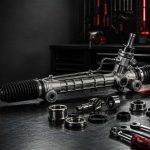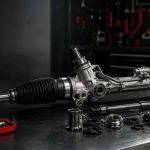
Steering rack definition
A steering rack is a toothed bar inside the steering gear assembly. When the driver turns the steering wheel, the steering column turns a small gear called the pinion. The pinion meshes with the rack teeth and slides the rack left or right. Each end of the rack connects to tie rods, which push or pull the front wheels into the direction requested by the driver. [S1][S2]
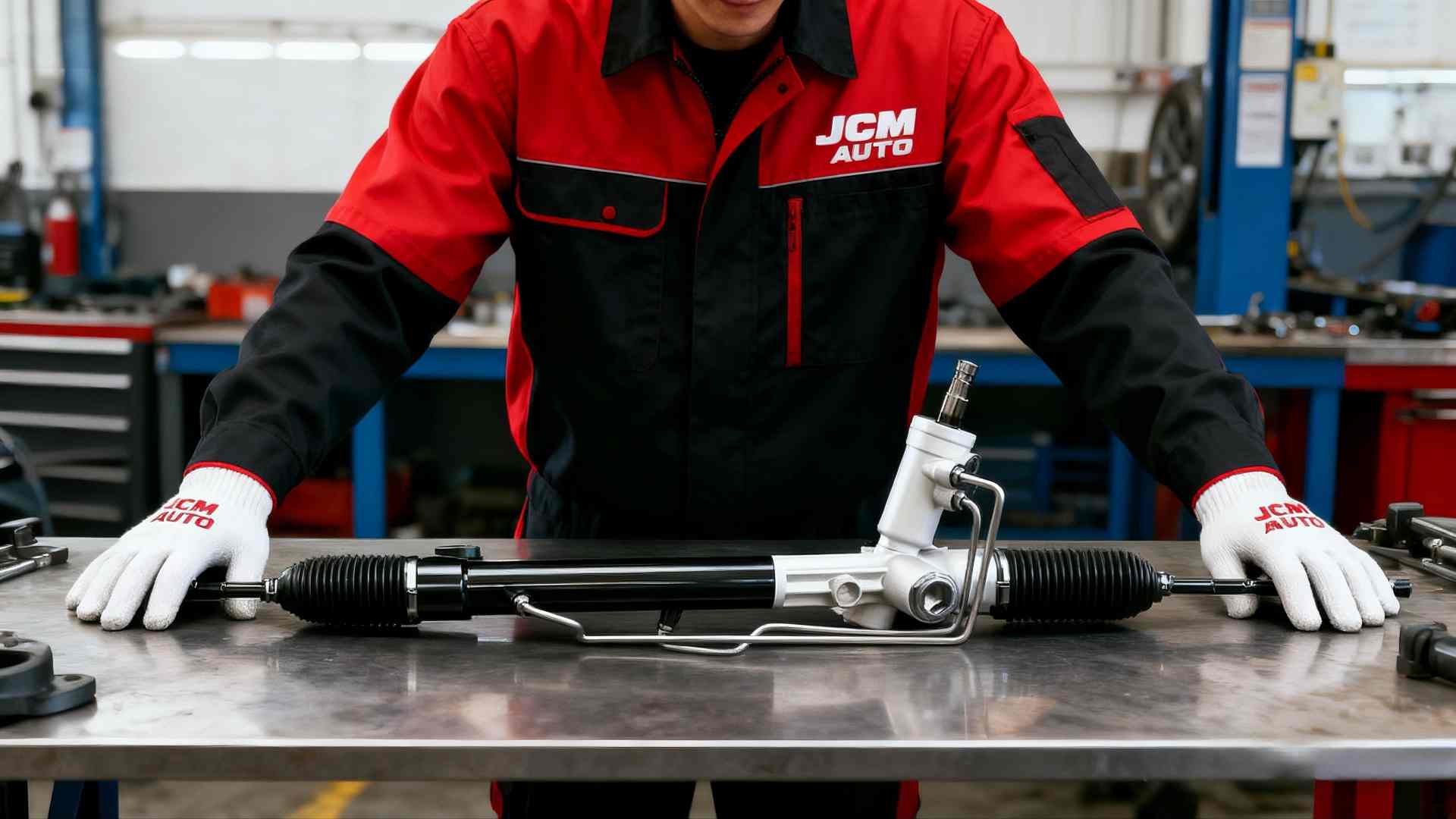
A steering rack assembly usually spans the front axle area and connects to the steering column and tie rods.
Is a steering rack the same as rack-and-pinion?
People often use the terms interchangeably, but they are not exactly the same. The rack is the straight toothed bar. The pinion is the small circular gear attached to the steering input. Rack-and-pinion describes the gearset that makes the conversion from rotation to left–right movement.
| Term you see | What it usually means | Buying or repair note |
|---|---|---|
| Steering rack | The main rack assembly that moves left and right. | May or may not include inner tie rods, boots, sensor parts, or hydraulic lines. |
| Rack and pinion | The rack plus pinion gear mechanism, often used as shorthand for the whole assembly. | Common in repair quotes and parts catalogs; confirm the exact part listing. |
| Power steering rack | A rack assembly with hydraulic, electro-hydraulic, or electric assist hardware. | Hydraulic and EPS racks have different failure patterns and service requirements. |
| Steering gear assembly | Catalog wording for the steering gear unit. | Can vary by supplier, vehicle platform, and included components. |
For a deeper comparison of the wording, read Steering Rack vs. Rack and Pinion.
What a steering rack is not
Not the power steering pump
In hydraulic systems, the pump creates fluid pressure. The rack uses that pressure to help move the steering linkage.
Not a steering gearbox
Older recirculating-ball steering systems use a different steering gear layout instead of a rack-and-pinion rack.
Not just the tie rods
Tie rods transfer movement from the rack to the wheels. They can cause loose steering even when the rack itself is not the main problem.
How a steering rack works
The simple model is rotation → sliding → wheel angle. The assist system, if the vehicle has one, changes how much effort the driver feels, but the rack-and-pinion geometry still performs the movement conversion.
- Turn input: the driver turns the steering wheel, which turns the steering column and pinion gear.
- Rotation-to-linear conversion: the pinion teeth push against the rack teeth, sliding the rack left or right.
- Wheel angle change: tie rods transfer rack movement to the steering knuckles, turning the front wheels.
Hydraulic assist
Hydraulic power steering uses fluid pressure to reduce driver effort. A pump sends pressurized fluid to a control valve, which helps move the rack through a piston. Low fluid, air, leaks, worn hoses, or pump problems can make the steering feel heavy even if the rack gears are not the only issue.
Electric assist
Electric power steering uses an electric motor and sensors to assist steering. EPS-related problems may appear as intermittent assist, warning lights, unusual steering feel, or calibration-related complaints after service. [S3]
Types of steering racks
The rack’s basic job is similar across designs, but the assist method changes how the system fails and what should be checked first.
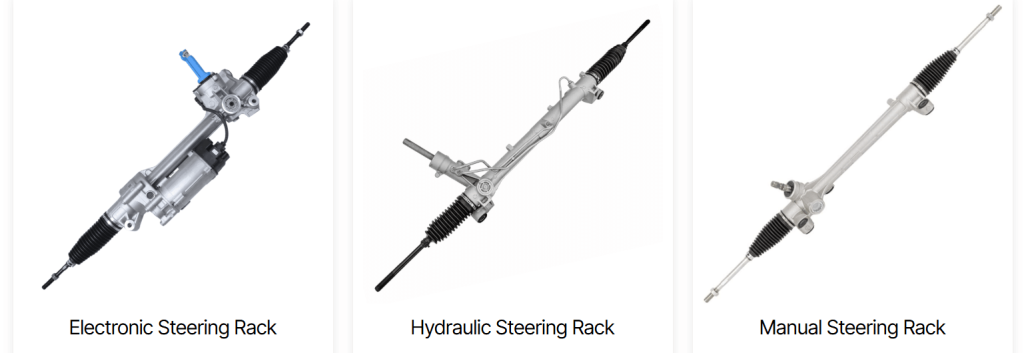
| Type | How assist works | Typical first clues | Practical takeaway |
|---|---|---|---|
| Manual rack | No assist; steering effort comes from the driver. | Heavy steering at low speed; looseness if internal wear develops. | Simple layout, but uncommon on many modern passenger vehicles. |
| Hydraulic power steering rack | Fluid pressure helps move the rack through valves and a piston. | Fluid leaks, whining noise from the hydraulic system, heavy steering, inconsistent assist. | If symptoms change with fluid level or engine speed, inspect the hydraulic side carefully. |
| Electro-hydraulic rack | Hydraulic rack assisted by an electric pump rather than a belt-driven pump. | Assist drop-out, pump noise, electrical faults, hydraulic leaks. | Both hydraulic and electrical checks may be needed. |
| Electric power steering rack | Electric motor provides assist based on sensor and control-module input. | Warning light, intermittent assist, heavy steering, calibration complaints. | Scan-tool diagnosis and calibration may be required on some vehicles. |
Key parts and what can go wrong
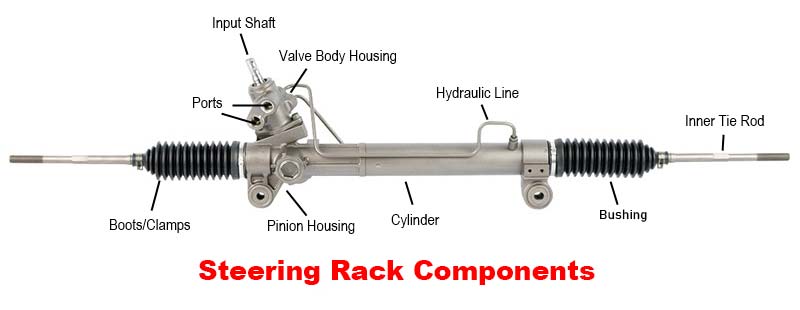
A “bad steering rack” complaint can come from gear wear, worn bushings, torn boots, inner tie rods, hydraulic seals, EPS motor or sensor issues, or related suspension parts. The table below helps separate the main rack from nearby look-alikes.
| Part | What it does | What you may notice | What to check next |
|---|---|---|---|
| Rack bar and pinion | Converts steering input into sliding rack movement. | Loose feel, wandering, uneven tire wear, steering play. | Confirm tire condition and alignment, then inspect for internal play. |
| Inner tie rods | Transfer rack movement outward to the wheels. | Clunks over bumps, loose steering feel, alignment drift. | Inspect inner and outer tie rods before replacing the rack assembly. |
| Boots / bellows | Protect inner joints and seals from dirt and water. | Torn boot, contamination, or fluid inside the boot on hydraulic systems. | Replace torn boots and confirm whether fluid is from the rack, hose, or pump area. |
| Mounts and bushings | Hold the rack in position on the subframe or chassis. | Clunking, movement at the rack, vague steering response. | Check rack movement while steering is loaded safely. |
| Seals and hydraulic lines | Contain power steering fluid in HPS or EHPS systems. | Fluid leaks, low fluid, heavy or jerky steering. | Clean and recheck the highest wet point before blaming the rack. |
| EPS motor / sensors | Provide or control electric assist. | Warning light, assist loss, intermittent steering feel. | Scan for codes and follow vehicle-specific calibration steps. |
Quick checks before replacing a steering rack
These checks do not replace a professional inspection. They help you describe the symptom clearly and reduce the chance of replacing the wrong part.
- Look for fluid: check the ground under the front center and inspect the rack boots if accessible.
- Listen while turning: note whether the noise is a clunk, pop, grind, whine, or squeal.
- Feel steering free play: while safely parked, gently move the wheel left and right and notice delay before the tires respond.
- Compare cold and warm behavior: write down whether the symptom changes after driving.
- Check related parts: tie rods, ball joints, control arms, strut mounts, tires, wheel balance, and alignment can mimic rack problems.
- Identify the assist type: hydraulic, electro-hydraulic, and electric systems require different checks.
Symptoms that may look like a steering rack problem
| Symptom | Could be the rack | Could be another part | Best next step |
|---|---|---|---|
| Fluid leak near front center | Rack seal or hydraulic line near the rack. | Pump, reservoir, pressure hose, return hose, cooler line. | Clean the area and identify the highest wet point. |
| Clunking while turning | Rack mount, inner tie rod, or internal rack movement. | Outer tie rods, ball joints, strut mounts, control arm bushings. | Inspect steering and suspension linkage before ordering the rack. |
| Loose or wandering steering | Internal rack wear or loose rack mounting. | Tires, alignment, tie rods, wheel bearings, suspension bushings. | Check tire condition and alignment first, then inspect linkage play. |
| Heavy steering | Rack binding or assist problem inside the rack. | Low fluid, trapped air, pump issue, belt slip, EPS fault, tire pressure. | Confirm assist system condition before replacing mechanical parts. |