Quick Summary Key Points
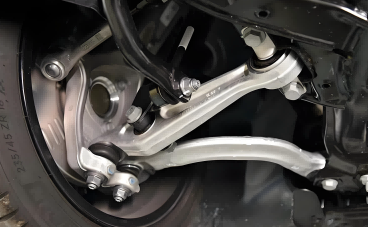
A lower control arm is a suspension link that connects the chassis or subframe to the steering knuckle, helping locate the wheel while allowing the suspension to move.
- Typical connection points: inner bushings attach to the chassis or subframe, and the outer ball joint connects to the steering knuckle.
- 3 common warning signs: clunking over bumps, steering wander, and uneven tire wear.
- Best next step if symptoms appear: have the suspension inspected and check alignment after repair.
Other names you may see
control arm
lower arm
A-arm
wishbone
Tip: On many strut front suspensions, “control arm” often refers to the lower control arm.
Quick answer
A lower control arm connects the chassis or subframe to the steering knuckle. It helps keep the wheel positioned correctly as the suspension moves, typically using bushings on the chassis side and a ball joint on the knuckle side.
Many suspension references describe a control arm as a key locating link in the suspension system. [S1]
What does a lower control arm do?
It helps locate the wheel under braking, acceleration, and cornering. When the arm, bushings, or ball joint wear out, the wheel can move more than it should, which may show up as noise, instability, or faster tire wear.
- Wheel location: helps limit fore/aft and side-to-side movement at the wheel.
- Geometry control: influences how camber and toe behave through suspension travel.
- Noise and vibration control: bushings help reduce harshness while preserving handling stability.
Where is the lower control arm located on a car?
It sits below the steering knuckle and attaches at two ends: inner bushings connect to the chassis or subframe, and an outer ball joint connects to the steering knuckle.
If your estimate says “lower control arm,” confirm whether it refers to the front or rear of the vehicle, and the left or right side.
Common lower control arm designs
The phrase “replace the lower control arm” can mean different things depending on the vehicle design. These are common cases:- Loaded control arm assembly: arm, bushings, and ball joint supplied together. This is often the most straightforward replacement.
- Serviceable components: separate bushings or ball joint may be replaceable, but the job can require press work and additional labor.
- Multi-link suspensions: “lower control arm” may refer to one specific lower link within a multi-link suspension set.
Lower control arm vs upper control arm
Lower arms usually carry more load and strongly affect wheel location. Upper control arms, when present, help define suspension geometry and camber behavior.
For a full overview of suspension layouts such as MacPherson strut, double-wishbone, and multi-link designs, see Guide to Control Arms.
Symptoms of a bad lower control arm
Use this table to connect what you feel while driving with what a shop may inspect. These symptoms can overlap with other suspension, steering, tire, or brake problems, so they should not be treated as a guaranteed diagnosis.| Symptom you notice | Common cause | Quick check | Risk level |
|---|---|---|---|
| Clunking over bumps | Worn bushing or ball joint | Look for torn bushing rubber, a torn ball joint boot, or visible looseness | High |
| Steering wander or instability | Excess play at bushings or ball joint | Does the car drift with small steering inputs or feel “floaty”? | High |
| Uneven tire wear | Geometry changes from bushing deflection | Check inner and outer edges; compare left vs right tires | Medium–High |
| Vibration during braking | Bushing movement or loose hardware | If vibration changes with braking load, inspect bushings and mounting bolts | Medium |
| Pulling to one side | Alignment shift or worn joint | Rule out tire pressure and tire condition first, then inspect suspension and alignment | Medium |
Safety note: If your question is whether the vehicle is still safe to drive with a bad control arm, use the safety guide before continuing normal driving.
Repair vs replace: bushings-only vs full arm
Shops usually choose between these approaches. This table is written for owners comparing repair options, not as a step-by-step repair procedure.| Option | When it may make sense | What to ask your shop | Common trade-off |
|---|---|---|---|
| Replace the whole arm | Ball joint is worn, joint is integrated, corrosion is heavy, or a predictable installation is preferred | “Is the ball joint included with the arm?” | Higher part cost, often simpler labor |
| Bushings-only or ball-joint-only | Design is serviceable and the arm is straight with limited corrosion; shop has proper press tools | “Will this require pressing, and what happens if bolts are seized?” | Lower parts cost, but labor can increase |
| Both sides | Vehicle has higher mileage and both sides show similar wear | “Is it recommended to replace left and right together on this model?” | Higher total cost today; may reduce repeat labor later |
Do you need an alignment after lower control arm replacement?
Usually yes. Replacing a lower control arm can change toe, camber, or caster, especially if bushings were previously collapsed or bolts were seized and re-indexed during installation.
General alignment guidance supports checking alignment after suspension work. [S3]
Quick inspection checklist
These are practical checks you can do before visiting a shop. They do not replace a professional inspection.- Visual bushing check: torn rubber, cracking, or separation from the sleeve.
- Ball joint clues: torn boot, grease leakage, or visible looseness.
- Tire wear pattern: compare inner and outer edges, and compare left vs right tires.
- Noise pattern: note whether the noise is a clunk over bumps or a vibration under braking.
Replacement cost and estimates
Prices vary widely by vehicle design, parts choice, local labor rate, alignment needs, and whether the ball joint or bushings are included with the arm. For parts, labor, and alignment factors, see: Control Arm Replacement Cost.FAQ
Short answers to common lower control arm questions.
What is a lower control arm?
A suspension link that connects the chassis or subframe to the steering knuckle. See quick answer.What does a lower control arm do?
It helps locate the wheel while allowing suspension travel, improving stability under braking and cornering. See function.What are common symptoms of a bad lower control arm?
Clunks, steering wander, and uneven tire wear are common signs, often related to worn bushings or a worn ball joint. See symptoms.Lower vs upper control arm — what is the difference?
Lower arms usually carry more load and strongly affect wheel location; upper arms, if present, help define suspension geometry. See comparison.Do I need an alignment after replacement?
Usually yes, because control arms can affect wheel angles. See alignment notes.Can I replace only the bushing instead of the whole arm?
Sometimes, if the design is serviceable and corrosion is limited. Many vehicles use loaded assemblies. See repair options.Where can I find replacement cost information?
See the control arm replacement cost guide for parts, labor, and alignment factors. See replacement cost.How this guide was checked
This guide explains what a lower control arm does, where it is located, which symptoms may point to wear, and which questions to ask before approving repair work.- Terminology: lower control arm, bushings, ball joint, steering knuckle, loaded assembly, and serviceable components.
- Safety wording: symptoms are treated as clues, not a guaranteed diagnosis.
- Practical use: the guide helps readers compare inspection findings, repair estimates, and replacement-part options.
Written by: JCMSTECH Research Team · Last reviewed: 2026-01-16