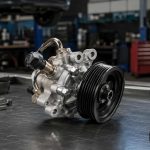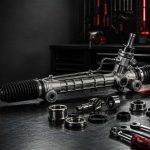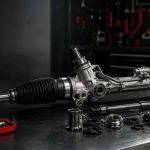
A car’s suspension system is a crucial mechanical assembly that connects the vehicle’s frame to its wheels. Its primary roles include ensuring driving stability, absorbing road vibrations, and enhancing passenger comfort and handling safety. Below is a detailed breakdown.
Functions of the Suspension System
Vibration Absorption
Mitigates shocks from uneven road surfaces (e.g., bumps, potholes) by using components like shock absorbers and springs, reducing jolts transmitted to the cabin.
Maintaining Tire Contact
Keeps all wheels firmly grounded, optimizing traction and control—critical for braking, acceleration, and cornering.
Steering Stability
Supports precise steering by minimizing body roll (lateral tilting during turns) and maintaining proper wheel alignment.
Body Support
Distributes the vehicle’s weight evenly across all wheels, preventing excessive stress on tires and chassis components.
Types of suspension
Independent Suspension
Feature: Each wheel moves independently (e.g., MacPherson strut, double-wishbone, multi-link).
Advantage: Superior comfort and handling, as motion on one wheel doesn’t directly affect the opposite wheel.
Usage: Common in passenger cars and modern SUVs.
Dependent (Solid Axle) Suspension
Feature: Wheels are linked via a solid axle, so movement on one wheel affects the other.
Advantage: Simple, durable, and cost-effective.
Usage: Older vehicles, heavy-duty trucks, and some off-road vehicles.
Air Suspension
Feature: Uses air-filled chambers instead of traditional springs, allowing adjustable ride height and stiffness.
Advantage: Customizable comfort and performance (e.g., lowering for highway stability or raising for off-roading).
Usage: Luxury cars, high-end SUVs, and commercial vehicles.
Hydraulic Suspension
Feature: Uses hydraulic fluid to control ride height and damping (e.g., Citroën’s Hydropneumatic system).
Advantage: Extremely smooth ride and self-leveling capability.
Usage: Specialty or vintage vehicles.
Main car suspension parts
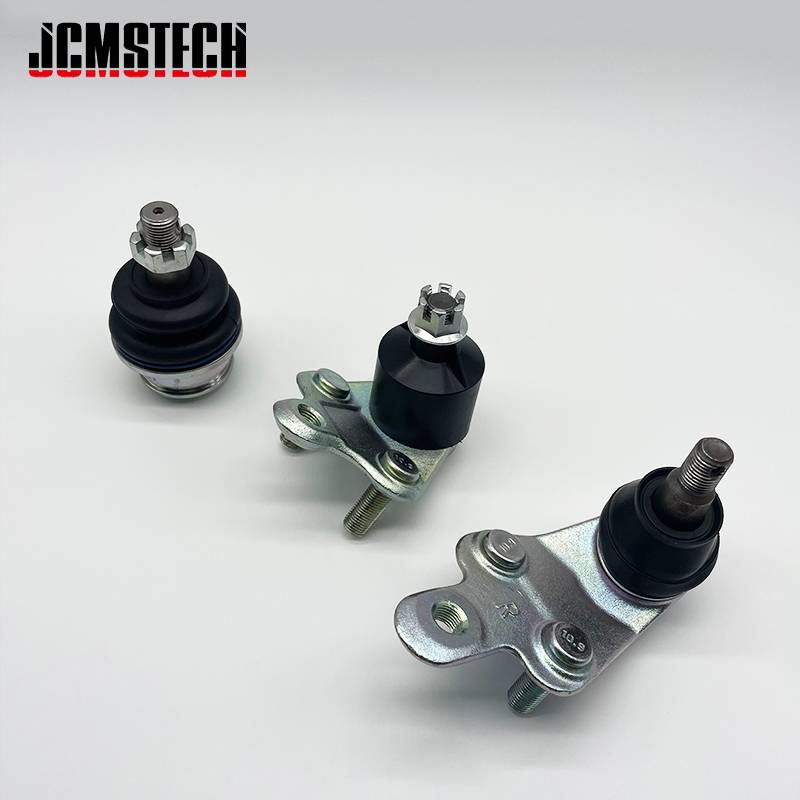
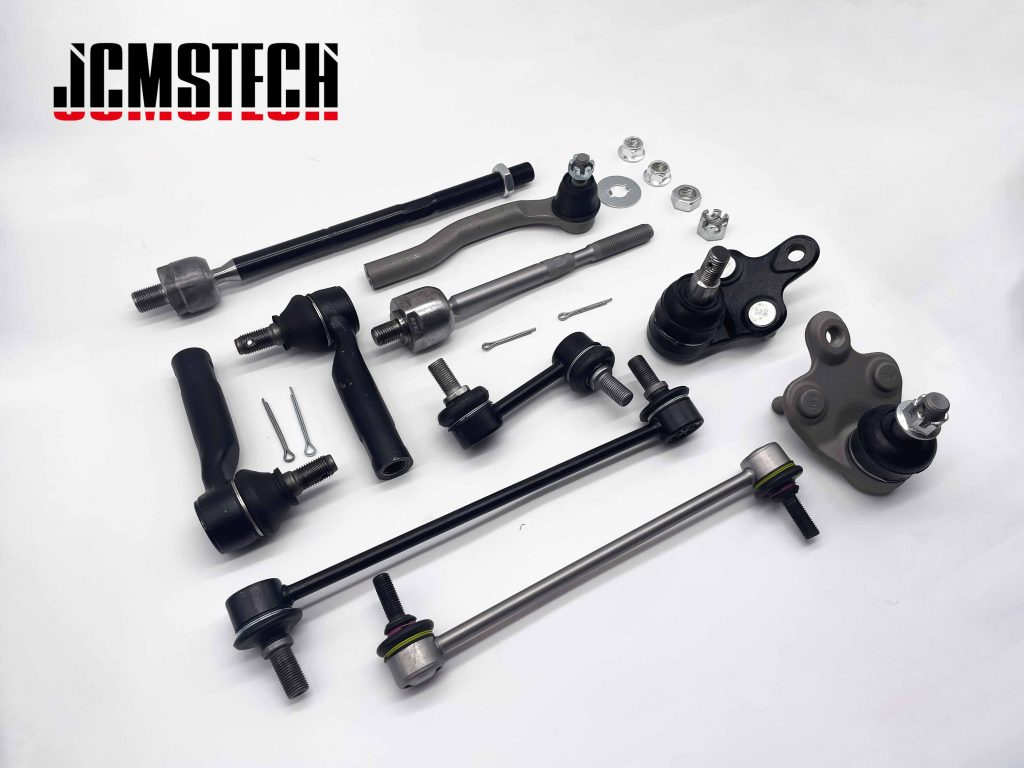
BALL JOINT
Ball joints are a part of the suspension system. Basically, ball joints provide a pivot point for each front wheel to pivot, or turn upon, as the steering system turns the front wheels left and right and the control arms move up and down. Each of the control arms of your front suspension system, upper and lower, have a ball joint at the outermost end of the control at its closest point to the front wheel.
In the case of strut-type suspension, there is only one lower ball joint affixed to the lower control arm at the same point. This ball and socket type configuration creates the ability for the wheels to turn left and right and move vertically with changes in the road surface while at the same time supporting the weight of the vehicle and providing a comfortable ride.
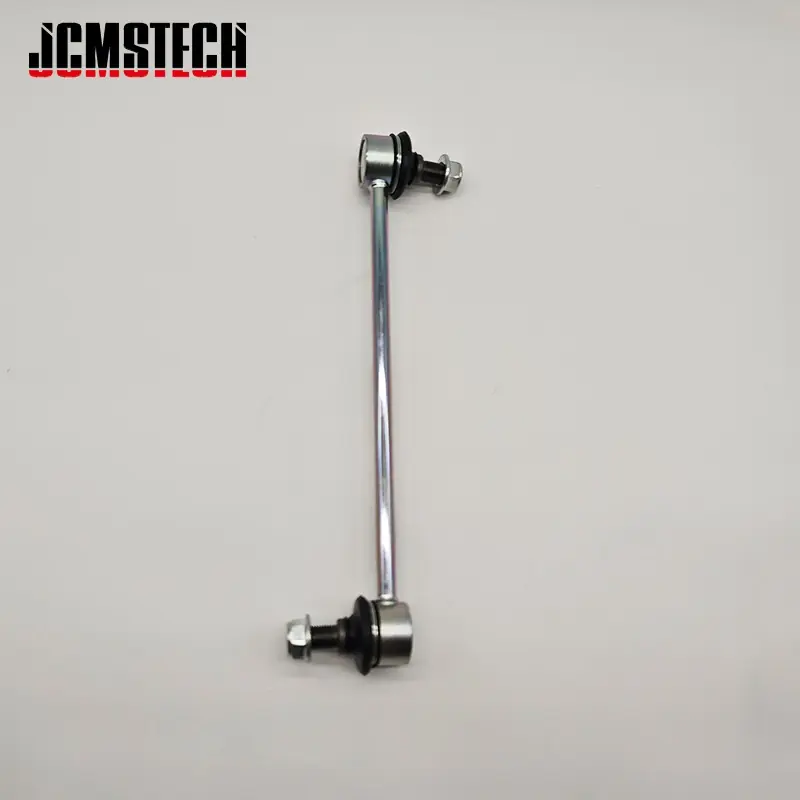
STABILIZER LINK
Part of the suspension system, a sway bar is a metal rod that runs across the width of the vehicle
and connects to the vehicle’s wheels. Also known as anti-roll bar, stabilizer bar or anti-sway bar,
sway bars enable the suspension to flex as the vehicle is turning to help reduce body roll and
leaning. Found on the front and/or back of the vehicle, sway bars deliver the handling
and stability needed to maintain vehicle control.
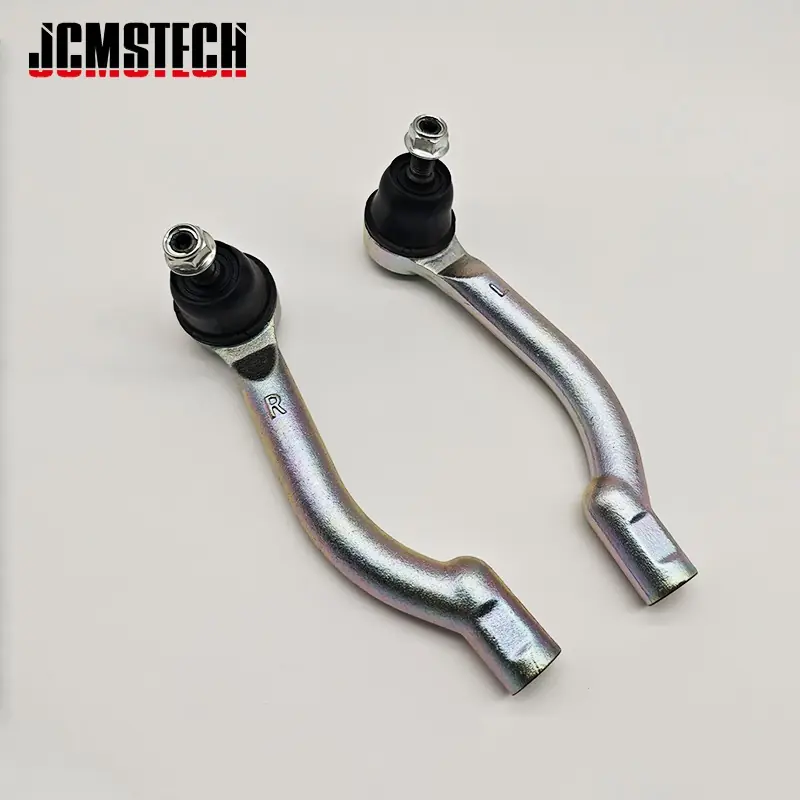
TIE ROD END AND RACK END
Tie rod ends are a part of the steering system. Tie rods connect the spindle, on which your front wheel is mounted on one end, to the steering gear mechanism on the other end. Whether your car steering design is a rack and pinion system or a steering gear box system, both systems have inner tie rod ends and outer tie rod ends. An outer tie rod end is connected to each front wheel spindle, and an inner tie rod end is connected to the steering rack or steering gear box assembly.
As your steering wheel is turned, a shaft connects the steering wheel to a steering gear assembly-either a steering gear box or rack and pinion gear mechanism. This gear box mechanism connects through a series of arms which connects to the tie rod ends. As you steer left or right, the steering gear pushes the steering arms and tie rods left or right.
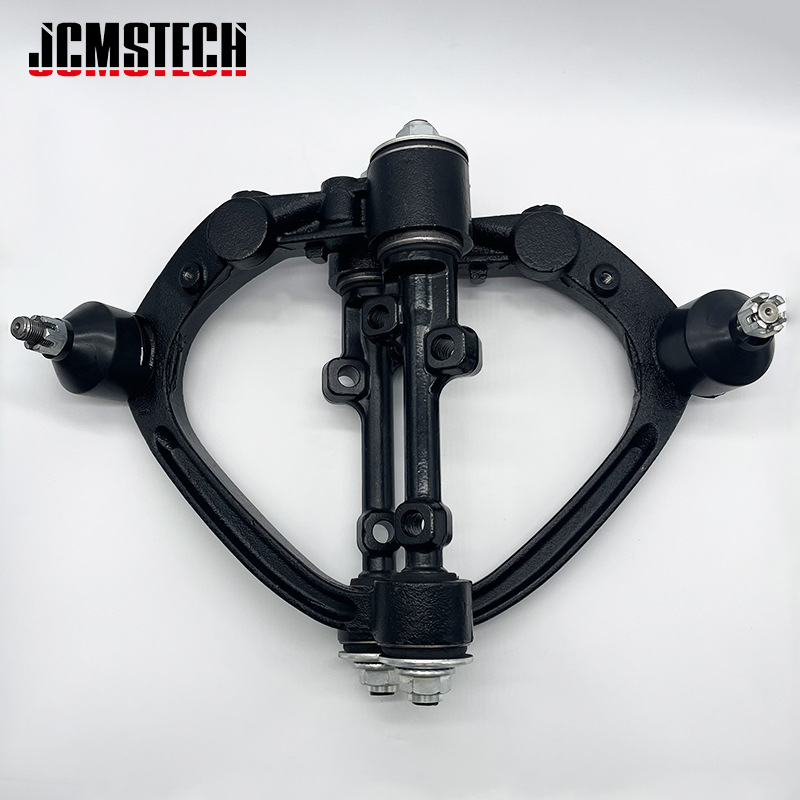
CONTROL ARMS
Control arms are the core of your front suspension system. In simple terms, control arms are the link that connects your front wheels to your car. One end connects to the wheel assembly and the other end connects to the framework of your car. The upper control arm connects to the uppermost area of the front wheel and the lower control arm connects to the lower most area of the front wheel, with both arms then attaching to the frame of the car. If you have independent rear suspension, the design is similar.
Suspension system components
Ball stud
This is the part of the joint that features a ball. The ball is made from high-strength steel and precision machined to exact dimensions and design. The ball stud must fit the socket as required, or the ball joint will not function as expected.
If the lubrication fails, the ball stud may wear out and cause excessive movement in the socket. Should that happen, the tie rod end requires to be replaced. One end of the stud is a threaded shaft that attaches the tie rod end to the steering knuckle.
The stud also features a tapered and threaded section. This part fits into a tapered opening on the steering knuckle, producing a firm hold and that ensures sturdiness in the whole tie rod end assembly.
Rubber dust cover
This part prevents the entry of grit and moisture. Usually made of rubber, the boot protects the joint from wear and corrosion. Most of the time, a bad tie rod end results from a dust boot that has ruptured or worn put to allow contaminants into the joint.
Some tie rod ends allow for the dust boot to be replaced. However,that can only be a remedy if the other parts of the joint are in good condition. In cases where the boot and the whole joint is severely worn or damaged, replacing the whole tie rod end assembly becomes inevitable.
Ring
These are rings that hold the dust boot in place and prevent the entry of dirt and different types of pollutants.In a new tie rod end, the rings are intact and sturdy. With time, age and various forms of damage may affect the condition of the dust boot, causing it to come off loose.This can be disastrous as it would cause all kinds of dirt and water to enter the joint.
Plastic bearing
Mostly polymer our steel bearings allow the joint to operate at low friction levels.Plastic bearings do not require any lubricant for the entire lifetime of the tie rod end. Others require the application of grease and the tie rod ends with such bearing feature a zerk installation for greasing purposes.
Over time, wear causes the usefulness of the bearings to wane, and the tie rod end to need replacing. That can take years, though, as these auto parts are usually made to last a long time.Although they require you regularly lube the joint, serviceable tie rod ends allow you to control the rate of wear at the joint.
Support spring
Located in the socket and at the end of the ball stud, the zerk installation provides compensation for wear and keeps the joint operating as required. The support spring is very powerful. As the joint wears with time, it pushes on the ball to keep the joint shock resistant. As a result, the tie rod end also remains tolerant to wear for a long time. The ball joints of some tie rod ends do not have this part.
Locring nut and locking pin
On the threaded end of the ball stud is a castle nut. Castle nuts derive their name from the shape that looks like a castle. Due to the grooved design, the nut allows a cotter pin to be inserted. This creates a firm hold and prevents the castle but from coming undine or unfastening.
With the crucial function that tie rod ends perform, this type of fastening is highly necessary. The castle but and cotter pin are used to mount the tie rod end to the steering knuckle.
Car suspension problems
No, any vehicle malfunction will affect the vehicle's handling and safety performance. Suspension system malfunctions can cause tire imbalance, delayed braking, and other issues.
There are many reasons that can cause varying degrees of damage to the suspension system, such as prolonged wear and tear, lack of regular maintenance, and poor driving habits.
Regular inspections are the best way to reduce maintenance costs for a vehicle. Any signs of malfunction should be addressed promptly, and damaged components should be replaced.