This article is here to help non-car experts choose between saving money and avoiding hassle.
OEM Parts and Aftermarket Parts Definition
Any parts made directly by automakers or produced under their commission, complete with the automaker’s logo and packaging, and sold at 4S dealerships, are called Original Equipment Manufacturer parts, or OEM parts.
In contrast, any parts sold by non-automotive companies are called aftermarket parts.
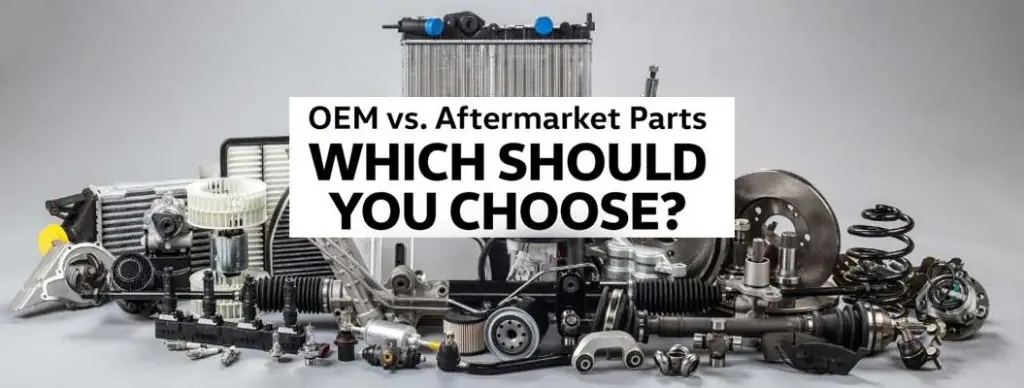
OEM parts versus aftermarket ones have their own advantages and disadvantages. Let’s dive in and take a closer look, comparing their pros and cons in detail!
For OEM Parts:
Pros:
They save you the hassle. They fit perfectly and work reliably. Just drop your car off at a 4S dealership, enjoy a cup of coffee, and you’ll be back on the road in no time!
Cons:
Buying OEM parts can be pricey, and many of us know that all too well, which is why aftermarket parts often come into play. Plus, if a car model has a design flaw, some parts might wear out faster. And if your dealership is out of stock on a part you need, you’re really paying double because, let’s face it, time is money, right?”
For Aftermarket Parts:
Pros:
Aftermarket parts are often identical to OEM parts, but some companies offer improved versions. These might be more durable, longer-lasting, easier to install, or fix flaws in the OEM version. For example, they might reinforce ball joints or add grease fittings
Cons:
With so many brands and varying prices, it can be hard for the average person to judge quality. Additionally, there’s a risk of sunk costs, and dealerships might not honor your warranty if you use non-OEM parts.”
When should we go with OEM parts?
Opt for OEM parts when replacing high-tech, expensive, or complex components like electronic steering racks, electronic brake boosters, or air suspension kits. The same goes for crucial sensors like MAF, MAP, or O2 sensors that impact fuel control.
When should we go with Aftermarket parts?
If your car is out of warranty, aftermarket parts might be a more economical choice. Many insurance companies prefer them too. They’re ideal for non-essential parts like consumables (brake pads, filters, wiper blades, etc.), suspension parts, and body parts.”
Why Aftermarket Parts Are Gaining Popularity Among Car Owners?
The car parts industry is highly advanced today. With standardized parts, materials and sizes are well-known. Aftermarket parts often match OEM specs exactly. Sometimes, they’re even made in the same factory, offering no difference in performance. Plus, aftermarket parts can come with longer warranties.
Summary:
Back to our previous question, between OEM PARTS and AFTERMARKET PARTS, we suggest that you find out what the manufacturer makes and then order the parts directly, which are cheaper and of the same quality. For example, Bosch is the OEM for many car parts, Denso and NGK make many electronics and ignition parts. Sometimes car manufacturers even share some parts. So, aside from the car company’s logo, the packaging, and the way higher price, is there really any difference in the quality of the product itself?

If you are not sure which brands mainly make which parts. Welcome to read our next article, where you can clearly understand which brand supplier you should choose when you want to replace chassis parts, electrical parts, or other parts.
Recommended Reading:
1. Using Aftermarket Parts For Car Repairs: The Pros And Cons
2. What is OEM vs Aftermarket? Choosing the Right Solution for Your Needs