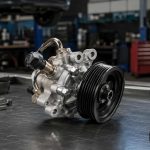
Importance of water pump in cooling system
Do you know which part protects the operation of the engine? The water pump is a very critical part. When it is running, it drives the coolant to circulate in various parts of the engine, such as the cylinder block, cylinder head, etc., so that the engine can run in a suitable temperature environment.
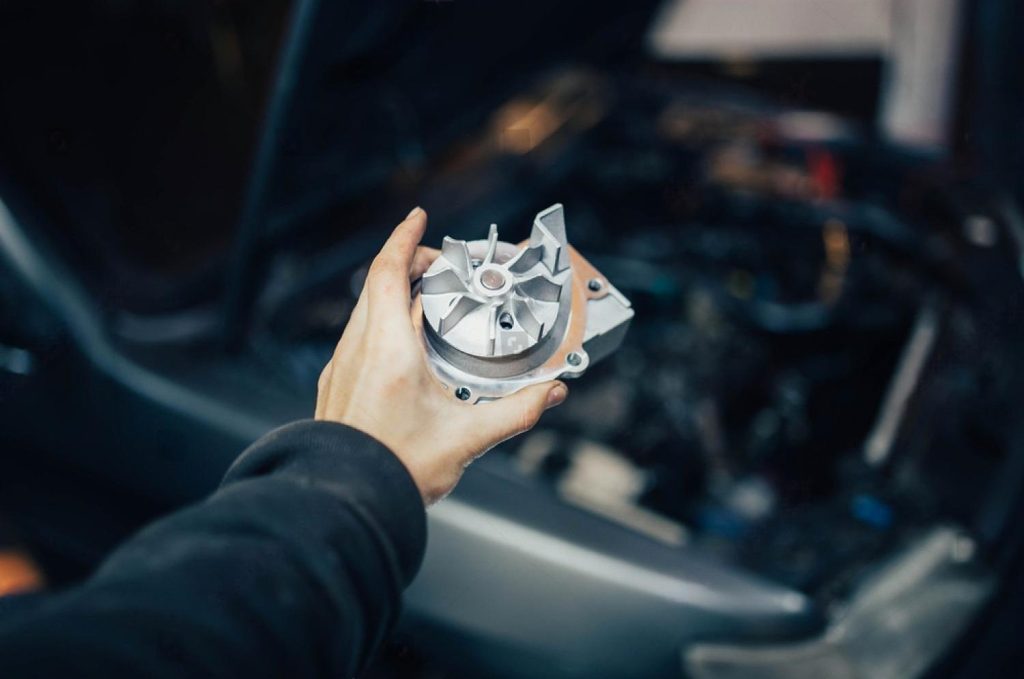
Consequences of failure water pump
Once we understand the importance of the water pump, its not hard to imagine the consequences of its failure. Firstly, it not only damages the engine but may also lead to high repair costs.
How to Catch a Dying Water Pump Before It Kills Your Engine
Let me tell you about Mrs. Henderson’s 2017 Honda CR-V. Last July, she rolled into our shop with steam pouring from the hood like a Yellowstone geyser. The culprit? A $15 plastic water pump impeller that decided to retire at 112,000 miles. That $400 repair turned into a $2,800 nightmare involving machined cylinder heads. Don’t let this be you – here’s how to read your car’s cry for help.
Primary Symptoms of Failing Water Pump
Coolant Leaks
When your vehicle is moved, but you notice a puddle of water under the center front of the vehicle, or there are signs of dried coolant around the water pump housing, or your weep hole is leaking (design fault indicator), these are all signs that your water pump has a problem.
Real-world example: 2018-2020 Ford F-150s with the 3.5L EcoBoost are notorious for weep hole leaks around 85k miles. Unlike radiator leaks that pool near the front, these leave a trail between the engine and firewall like green breadcrumbs.
Overheating Engine
Your dashboard should always be stable, but the temperature gauge is spiking and cooling can’t keep up with highway speeds. You need to have your water pump serviced. Other problems include steam coming out of the radiator/hood and inefficient coolant circulation.
Case Study: 2014 Chevrolet Silverado owner drove for 3 months with fluctuating temperatures. Result? $1,600 head gasket repair.
Unusual Noises
When you start your car in the morning, you hear a whining sound from the front of the engine. It lasts for about 2-3 seconds and then disappears. It is likely that there is a problem with your water pump. In addition to the whining sound, there is also a sound similar to a puppy groaning. This may be because the extra load causes the weak water pump to stop working. Loose belts will also make a slapping sound. These are the abnormal noises you will hear after a water pump failure.
Visible Corrosion
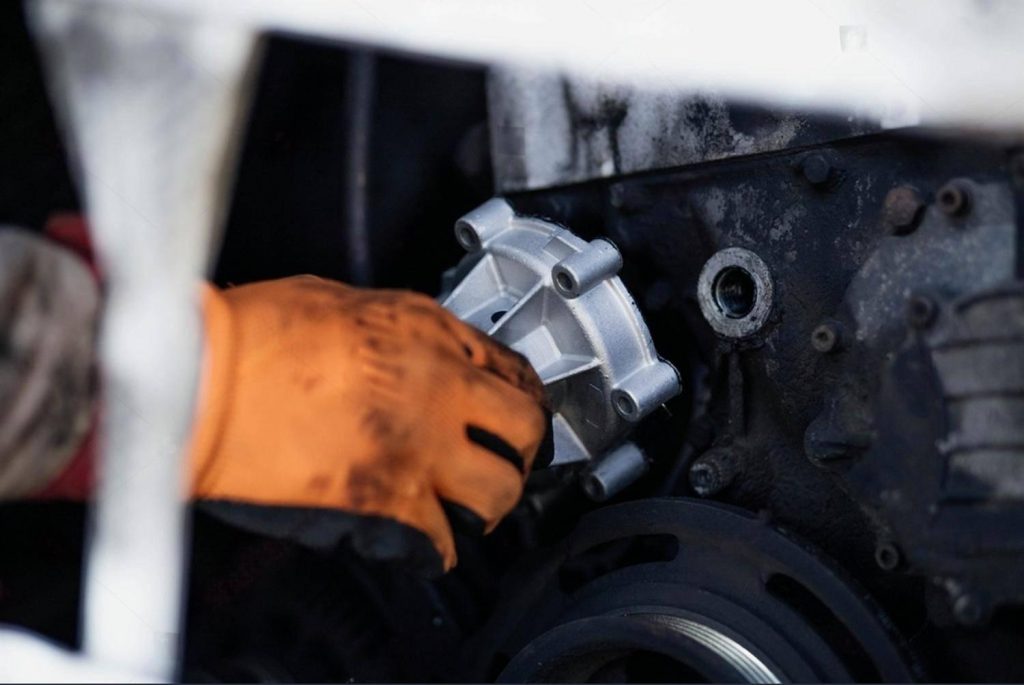
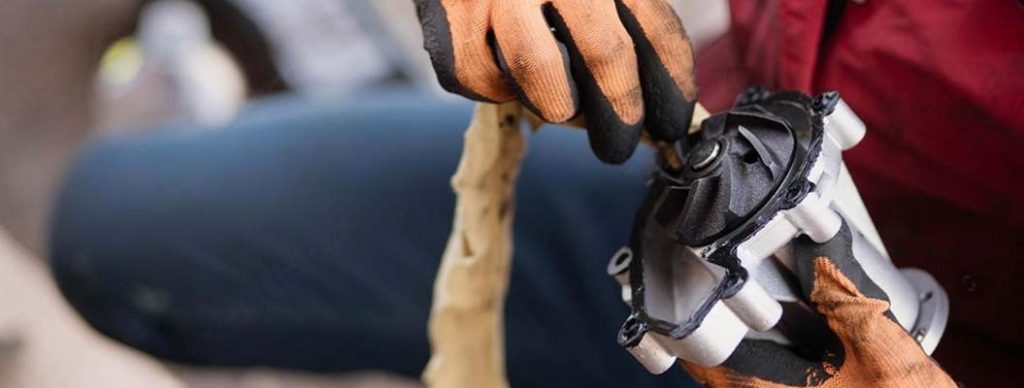
When your water pump fails, the pump casing, impeller blades and gaskets will all have varying degrees of corrosion problems: rust and crusty deposits on the pump casing; cavitation on the impeller blades; and gaskets that swell or even rupture.
Secondary Warning Signs
In addition to the obvious fault problems, minor warning signs are also listed to help you make better judgments.
| Circulation Issues | Bubbles in the coolant reservoir |
| Uneven cabin heating | |
| Bubbles in coolant reservoir | |
| Belt/Pulley Problems | Wobbling water pump pulley |
| Belt slippage/glazing | |
| Premature serpentine belt wear | |
| Temperature Fluctuations | Erratic gauge readings |
| Sudden overheating followed by normal temps |
Tip: For more information about serpentine belts, please read: Signs of a Failing Serpentine Belt
Water Pump Life Expectancy Cheat Sheet
| Vehicle Type | Average Lifespan | Failure Pattern |
| Domestic Trucks | 65k-110k miles | Impeller erosion |
| Japanese Sedans | 90k-130k miles | Bearing seizure |
| German Luxury | 50k-80k miles | Electronic control fails |
| Heavy Duty Diesel | 100k-150k miles | Gasket degradation |
Comparison of lifespan and failure of common water pump types
| Pump Type | Common Vehicles | Failure Mileage | Unique Symptoms |
| Cast Iron | F-150, Silverado | 90k-140k | Rust flakes in coolant |
| Composite | CR-V, RAV4 | 75k-110k | Cracked housing joints |
| Electric | Prius, Tesla Model S | 60k-90k | Software error codes |
Water Pump Diagnostic Checks
There are four common inspection methods
1. Visually inspect the drain hole: directly determine whether there is leakage
2. Pulley swing test: If the swing is abnormal, such as obvious looseness, large gap, abnormal noise, etc., it indicates that there is a problem with the water pump. If the gap is too large, it may also be a bearing failure.
3. Pressure test the cooling system: observe the pressure changes during the test
4. Check whether the impeller is off: This is common in plastic pumps.
Conclusion
Last winter, our client shared an anecdote from his shop where one of his regular customers ignored the groaning of his water pump… until a snowstorm locked up the car. A $380 repair bill turned into a $7,200 engine rebuild. The lesson? When your car starts making water pump noises, don’t wait.
FAQ
Q1: My truck’s water pump died right after the warranty expired. Is this a setup?
Common Culprits:
2019 RAM 1500 (5.7L HEMI) – Fails at 82k miles on average
2020 Silverado 3.0L Diesel – 67% of owners report failures before 74k miles
Industry Secret: Some manufacturers use composite plastic impellers that fail 40% faster than cast aluminium ones.
Q2: Is a tiny leak really worth fixing ASAP?
Leak Severity Guide:
| Leak Level | Action Required | Survival Time |
| Damp residue | Monitor weekly | 3-8 months |
| Drip (1 drop/stop) | Repair within 2 weeks | 1-3 months |
| Puddle formation | Tow immediately | <48 hours |
Q3: Why does replacing a water pump require messing with the timing system?
Design Quirks: Ford Ecoboost/Toyota Camry integrate pumps into timing covers
Labor Comparison:
Standalone pump: 2.5 hrs/$220 labor
Integrated pump: 6.5 hrs/$550+ labor
Q4: Do I need genuine OEM parts?
Real-World Test Data:
| Brand | Avg. Lifespan | Price | Leak Rate |
| OEM | 105k miles | $380 | 4% |
| Gates | 98k miles | $210 | 11% |
| Knockoff | 32k miles | $85 | 63% |
Q5: What happens if I keep driving with a bad pump?
A Texas F-150 Owner’s Nightmare:
Day 1: Occasional temp spikes → Ignored
Day 3: Blasting hot AC air → Turned off AC
Day 5: Engine knocking → $8,700 engine rebuild
Q6: How to check my water pump’s health?
5-Minute DIY Inspection:
- Cold engine oil cap – Milky pink foam? Coolant mixing with oil
- Shine flashlight on pulley – Side-to-side wobble >1/8? Bearing failure
- Feel upper radiator hose at idle – No pulse? Pump isn’t circulating
Q7: Are electric water pumps better?
Tesla Model 3 Data:
- 37% lower failure rate than mechanical pumps
- 2.8x higher repair costs (requires software recalibration)
- Telltale Signs:
✔ Double warm-up time in winter
✔ Cooling system reduced alert
Q8: My pump sounds like a blender full of forks. Can it last till payday?
Risk Calculator:
- Metal grinding: Remaining life ≈ engine runtime × 3 hours
- High-pitched whine: 300-500 miles left
- Low rumbling: STOP NOW! Bearing debris in the coolant
Q9: What else should I replace with the water pump?
Smart Money Bundle:
- Timing belt/chain (saves 80% labor)
- Coolant (never mix types)
- Serpentine belt (while you’re in there)
Case Study: Honda Accord owner paid extra $170 for belt replacement 3 months later
Q10: Dealer wants $1,200 vs. $600 at Joe’s Garage. What’s the catch?
Price Breakdown:
| Item | Dealer | Independent Shop |
| Pump Assembly | Aisin OEM ($390) | Remanufactured ($150) |
| Coolant | OEM-specific ($55/gal) | Universal ($12/gal) |
| Sealant | High-temp RTV ($28) | Cheap silicone ($6) |
| Warranty | 2-year/unlimited miles | 90 days |